The Utility for a City of Water
Helena Water Board’s primary mission is to plan for, operate, and maintain both the infrastructure and the organization necessary to purvey high quality drinking water, to provide an adequate and reliable water supply for all household, commercial, and community needs, and to sustain and enhance the region’s watersheds and quality of life by managing wastewater and stormwater effectively.
Whether we are providing safe water for residents to drink, supplying water for industries to manufacture goods here in the City, or protecting the region’s water resources, serving our customers with quality has been a commitment of the Helena Water Board throughout our history.
If you have a water or sewer emergency, please contact the Helena Police Department at (205) 663-6499.
City of Helena Utilities Board
P.O. Box 427
Helena, Alabama 35080
Phone: (205) 663-1670
Fax: (205) 663-1426
Office Hours: Monday – Friday
Drive Thru: 7:30am – 4pm
Lobby: 8am – 4pm
Utility Board & Members
Heidi Gates
Utility Clerk
Phone: 663-1670 ext 441
Angie Purvis
Utility Clerk
Phone: 663-1670 ext 442
Stacy Key
Revenue Clerk
Phone: 663-1670 ext 444
Hunter Lindsey
Water Management
Phone: 205-663-1670
E-mail: Hlindsey@cityofhelena.org
Rhonda Lewis
Chairman
Charlie Roberts
Member
Kim Ray
Member
Utilities Information
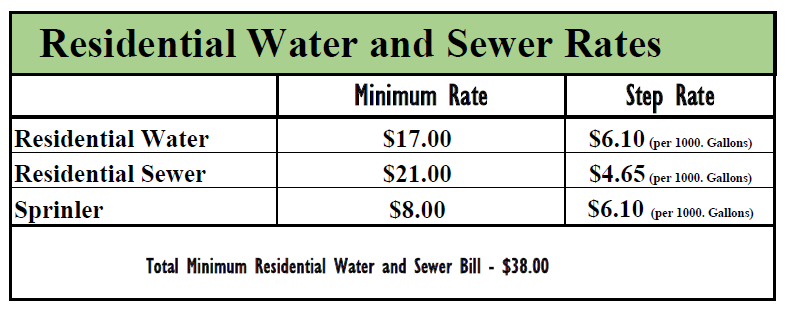
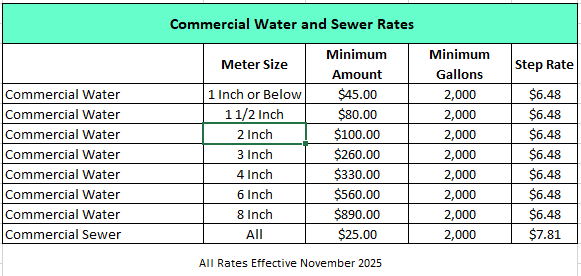
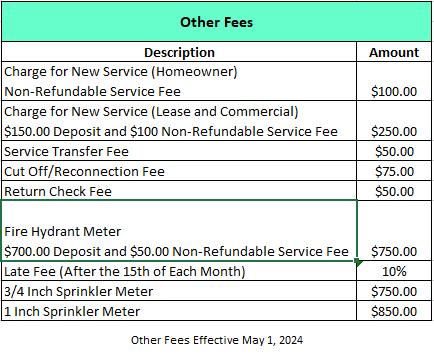
Utility Bills
- Meters are read during the middle of the month.
- Readings run from the middle of one month to the middle of the next month.
- Bills are sent out the first of every month.
- There is a drive through and an after hours drop box for payments. Payments can also be brought by the office or mailed.
- If payment is mailed, dropped into the depository or night deposit, please include the account number on your check and and/or your payment stub.
- Drive through and drop box are located on the side of the Helena Municipal Building, 816 County Road 52 East.
- Payment by automatic bank draft is also available for your added convenience.\
Customer shall mean all single or multi-family residences.
- Roughly 70 percent of an adult’s body is made up of water.
- At birth, water accounts for approximately 80 percent of an infant’s body weight.
- A healthy person can drink about three gallons (48 cups) of water per day.
- Drinking too much water too quickly can lead to water intoxication. Water intoxication occurs when water dilutes the sodium level in the bloodstream and causes an imbalance of water in the brain.
- Water intoxication is most likely to occur during periods of intense athletic performance.
- While the daily recommended amount of water is eight cups per day, not all of this water must be consumed in the liquid form. Nearly every food or drink item provides some water to the body.
- Soft drinks, coffee, and tea, while made up almost entirely of water, also contain caffeine. Caffeine can act as a mild diuretic, preventing water from traveling to necessary locations in the body.
- Pure water (solely hydrogen and oxygen atoms) has a neutral pH of 7, which is neither acidic nor basic.
- Water dissolves more substances than any other liquid. Wherever it travels, water carries chemicals, minerals, and nutrients with it.
- Somewhere between 70 and 75 percent of the earth’s surface is covered with water.
- Much more fresh water is stored under the ground in aquifers than on the earth’s surface.
- The earth is a closed system, similar to a terrarium, meaning that it rarely loses or gains extra matter. The same water that existed on the earth millions of years ago is still present today.
- The total amount of water on the earth is about 326 million cubic miles of water.
- Of all the water on the earth, humans can used only about three tenths of a percent of this water. Such usable water is found in groundwater aquifers, rivers, and freshwater lakes.
- The United States uses about 346,000 million gallons of fresh water every day.
- The United States uses nearly 80 percent of its water for irrigation and thermoelectric power.
- The average person in the United States uses anywhere from 80-100 gallons of water per day. Flushing the toilet actually takes up the largest amount of this water.
- Approximately 85 percent of U.S. residents receive their water from public water facilities. The remaining 15 percent supply their own water from private wells or other sources.
- By the time a person feels thirsty, his or her body has lost over 1 percent of its total water amount.
- The weight a person loses directly after intense physical activity is weight from water, not fat.
- Don’t over-water your lawn. Water every 3-5 days in summer and 10-14 days in winter.
- Use a broom instead of a hose to clean sidewalks.
- Run the dishwasher and washing machine when fully loaded.
- If you have a swimming pool, use a cover and you’ll save loss from evaporation by 90%.
- When hand washing dishes, don’t leave water running; use 2 basins – one for washing and one for rinsing.
- Defrost frozen foods in the refrigerator or microwave instead of using running water.
- Limit your shower time to less than 15 minutes.
- Turn water off while brushing your teeth.
Utility Board FAQ
Streets
The city is responsible for grass cutting along major roads only.
Draining ditches cutting and maintenance are the responsibility of the property owners.
At City Hall, or using this form.
On a city road, we must receive an appropriate number of reports before the major expenditure of asphalt is approved. If it’s a county or state road, the city is not responsible for pothole repairs.
We will pick-up once reported.
Report to city hall or police department.
Waste Management Treatment Plant
Any biodegradable items.
Toilet tissue
Because grease will clog your drain and may clog the main sewer lines to all homes in your area. Household chemicals pose a threat to our entire system because they can kill the microorganisms that treat the water.
When used properly, these products will not hurt the treatment process.
It’s a high-water alarm. We encourage you to call the Utility Department (663-2894) during normal operating hours. After hours, call the Police Dept. at 663-6499.
Call the Utility Department at 663-2894 or Police Department.